Straightening Wet Hair: The Short Answer First
Yes, you can straighten wet hair, but only hair that is damp rather than dripping, and only with a tool engineered for it. Run an ordinary flat iron at 200°C (390°F) across soaking strands and the water inside the hair shaft flashes into steam almost instantly. Steam occupies roughly 1,600 times the volume of the water it came from, and a cuticle is not built to hold that pressure.
Trichologists call the result bubble hair. Voids form inside the cortex, the cuticle lifts and cracks, and no conditioner repairs it. That is why most professional stylists refuse to flat iron freshly washed hair, and why wet-to-dry straighteners exist as a separate category with vapor channels, tighter thermostat control, and lower working temperatures.
The safe window is narrow and easy to state: towel-dried hair, a wet-to-dry tool, 140–160°C (285–320°F), one or two passes, and a heat protectant made for damp application. The sections below explain why each of those numbers matters in practice.
Why Wet Hair and High Heat Fail Together
Water changes hair in two ways that make heat styling riskier. It breaks the hydrogen bonds that hold the keratin structure in shape, so the fiber becomes softer and far more elastic; wet hair can stretch roughly 30 percent before it snaps, against about 20 percent when dry. It also swells the shaft and lifts the cuticle scales, so heat reaches the cortex faster and with less protection.
Then comes the trap. A plate touching a film of water cannot dry and style in the same moment, because it has to boil that water first. Because the hair still feels wet and unresponsive, most people clamp harder and glide more slowly over the same spot. Contact time rises, the plate keeps pumping heat through the water layer, and the damage compounds with every extra second.
What actually breaks
- Bubble hair: steam expands inside the cortex and leaves hollow pockets that snap under tension.
- Cuticle cracking: lifted scales chip and stop lying flat, so hair stays rough even after conditioning.
- Cumulative heat damage: three slow wet passes at high heat degrade protein faster than the same three passes on dry hair.
01
How Much Water Is Left, and What Heat It Tolerates
Water content, not styling ambition, sets the safe plate temperature. Test labs work from a reference like this one when validating wet-and-dry appliances.
| Hair condition |
Approx. water content |
Suggested plate temperature |
Main risk |
| Dripping wet, straight from the shower |
about 100% |
Do not flat iron at any setting |
Instant steam expansion, cuticle rupture |
| Towel-dried and damp |
70–80% |
140–160°C (285–320°F) in wet-to-dry mode |
Uneven drying and hot spots on slow passes |
| Nearly dry after rough drying |
10–20% |
150–175°C (300–350°F) |
Low; still keep passes to two |
| Completely dry |
below 5% |
175–190°C (350–375°F) for coarse hair |
Gradual heat damage over time |
Water content is estimated after towel drying; temperatures assume a wet-to-dry straightener with a stable thermostat and continuous movement.
A Safe Wet-to-Dry Routine, Step by Step
- 1Wash and condition as usual, then squeeze, never rub, the excess water out with a towel until the hair stops dripping. You are aiming for 70 to 80 percent dry.
- 2Apply a heat protectant formulated for damp hair. Lightweight sprays made for blow-drying work better here than heavy oils, which can scorch on hot plates.
- 3Rough dry the surface water first. A high-speed hair dryer on medium heat, held 15 to 20 cm away, removes the free water that causes sizzling.
- 4Section the hair into panels about 2.5 to 5 cm (1 to 2 inches) wide and clip the rest out of the way. Thin sections dry evenly; thick ones force you back over the same spot.
- 5Set the tool to wet-to-dry mode and the lowest working temperature, which means 140 to 160°C for fine, colored, or bleached hair. Glide from root to tip at a steady speed and keep the iron moving.
- 6Let each section cool for a few seconds before judging it. If it feels dry and smooth, stop there. Finish with a light serum on the ends only, never at the roots.
What a Wet-to-Dry Straightener Has to Do Differently
140–160°C: the working window where damp hair is styled without boiling the water trapped inside the shaft.
A tool sold for damp styling is not a normal flat iron with a different label on the box. It needs vapor channels or vents that let steam escape instead of forcing it back into the cuticle, a thermostat that holds plate temperature within a few degrees under load, and heaters that recover quickly after each pass over wet hair.
Plate material matters as well. Ceramic and tourmaline coatings spread heat evenly and reduce hot spots; titanium heats fast and holds temperature well on coarse hair but punishes fine hair when the setting is wrong. Whatever the coating, the temperature readout has to be honest, because a 20°C error is the difference between a clean pass and a scorched one.
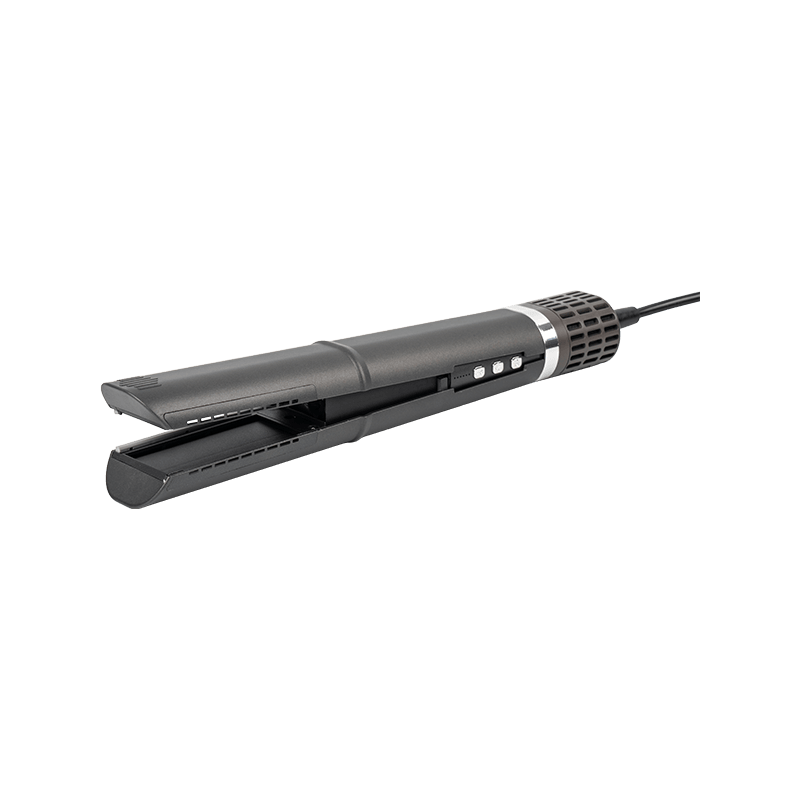
This is where a purpose-built two-in-one unit earns its place. The professional wet-and-dry model below is engineered around exactly this window, with plate temperature and venting matched to damp-hair styling.
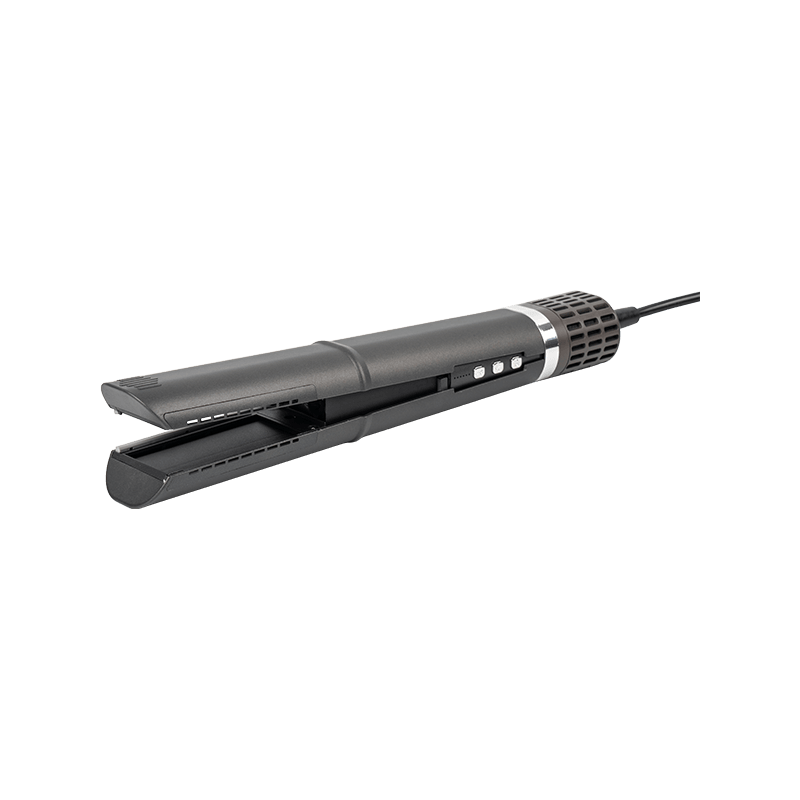 JYS-C6 Professional 2-in-1 Wet and Dry Hair StraightenerThis professional wet-and-dry model combines drying and straightening with high-speed airflow and precision plates, suited to damp-hair styling before damage patterns are reviewed.View Product →
Six Mistakes That Cause the Damage
| Common mistake |
What to do instead |
| Straightening soaking wet hair straight from the shower |
Towel dry or rough dry to 70–80 percent first; no plate should ever touch dripping hair |
| Cranking the dial to maximum to dry and straighten in one go |
Start at 140–160°C in wet-to-dry mode and raise heat only once the hair is dry |
| Four or five slow passes over the same section |
Two passes maximum; if it is not straight, the section is too thick, not too cool |
| Skipping heat protectant because the hair is still wet |
Apply a damp-hair heat protectant before drying; wet hair offers no protection of its own |
| Clamping hard and pulling slowly through the section |
Use light, steady tension and keep the plates gliding; pressure and dwell time cause the burn |
| Wet-styling freshly bleached or chemically relaxed hair |
Wait until the hair is completely dry and use the lowest setting the tool offers |
Most wet-styling damage traced back to a salon or at-home session fits one of these six patterns.
Moisture control can also come from the tool itself. Ultrasonic steam-mist straighteners release a fine mist just ahead of the plates, keeping the fiber hydrated while the heat does its work, which is useful for hair that has already been colored or chemically relaxed.
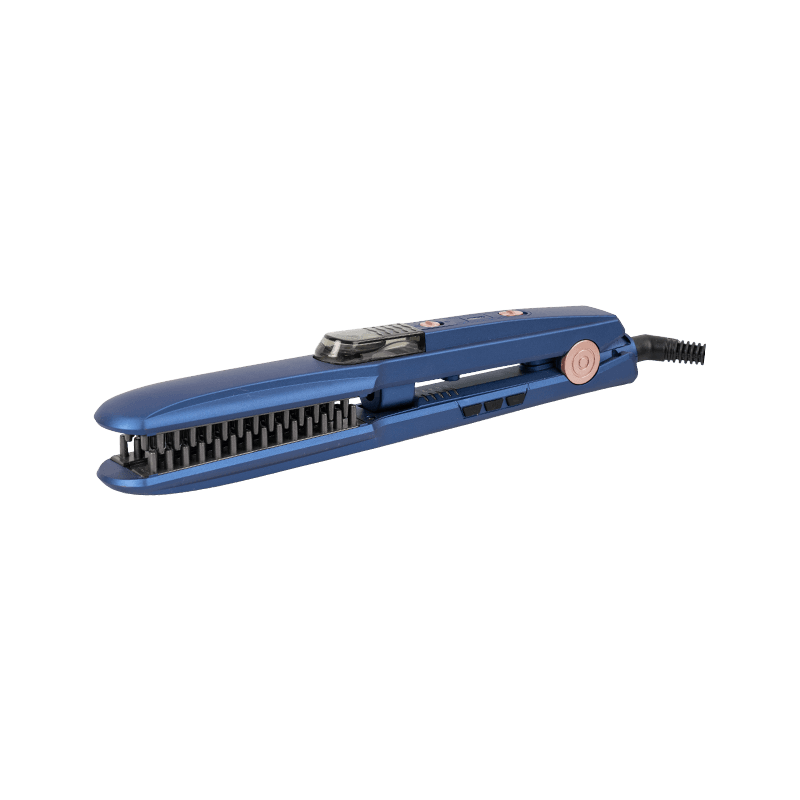 JYS-C3 Ultrasonic Steam Mist Hydrating Hair StraightenerThis ultrasonic mist straightener hydrates hair during heat styling with fine steam, a useful option for colored or chemically relaxed hair before comparing plate materials.View Product →
What to Check Before You Buy
- Temperature accuracy: look for a stated tolerance rather than just a range. A dial that drifts 10 to 20°C is a burn risk on damp hair.
- Vapor path: vents or channels that let steam leave the plate area. Sealed plates plus wet hair equals pressure inside the shaft.
- Plate coating and width: ceramic or tourmaline for even heat; narrow plates around 25 mm for short or fine hair, wider plates for thick hair.
- Safety cut-off: automatic shut-off after 30 to 60 minutes, plus a heat-resistant stand for the resting position.
- Certification: CE, GS, CB, ETL or an equivalent mark shows the appliance passed independent electrical and thermal testing.
- Manual quality: instructions that state a damp-hair temperature range suggest the tool was genuinely tested on wet hair.
If you are weighing plate materials more broadly, this guide to the straightener that is healthiest for your hair covers the trade-offs in more depth.
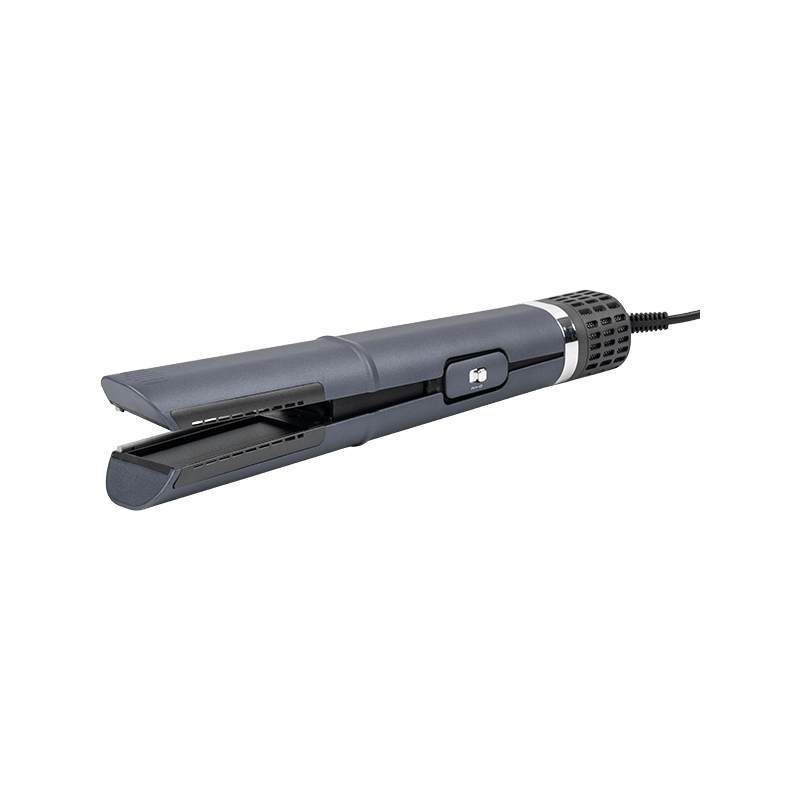
For shorter hair or for travel, a compact two-in-one body covers the same ground, so the safe temperature window stays the same while the plate footprint shrinks.
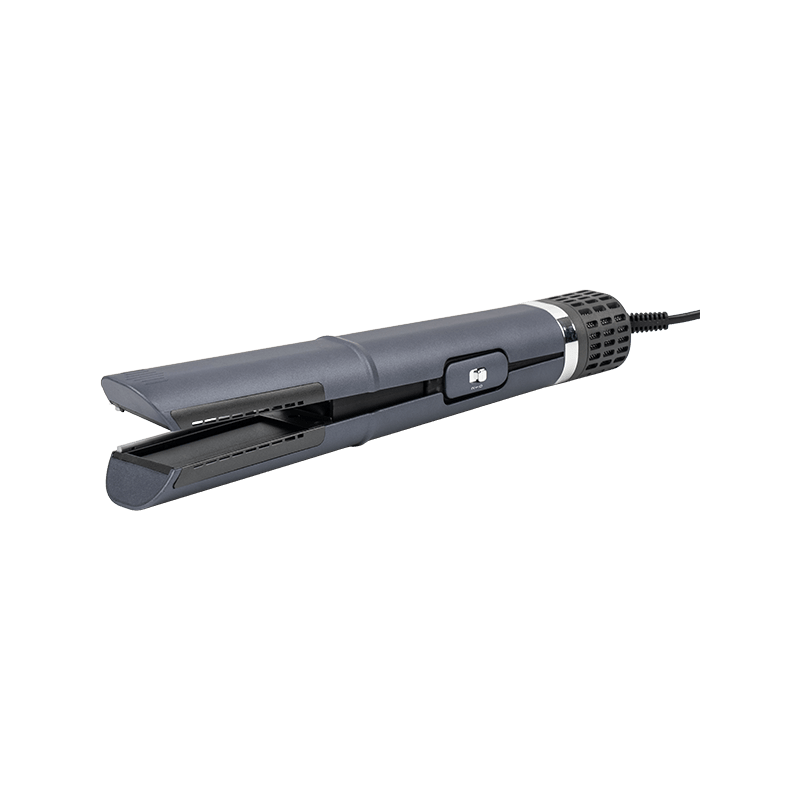 JYS-C6-B Compact 2-in-1 Wet and Dry Hair StraightenerA compact wet-to-dry styler for shorter hair or travel, pairing drying airflow with straightening plates while keeping the safe temperature window in mind.View Product →
“
Stop Signs You Should Never Style Through
Damage rarely announces itself at the moment it happens; it usually shows up a week later. These signals mean the hair is already compromised and another pass will make it worse.
- A hissing or sizzling sound as the plates close, or steam you can actually see. The tool is boiling water, not styling hair.
- A burnt smell, which indicates the protein itself is scorching rather than merely drying.
- White dots at the ends, or new split ends appearing within days of a wet styling session.
- Hair that snaps mid-shaft while wet, which is the classic signature of bubble hair.
When any of these appear, switch to blow-drying only and let the hair dry completely before a flat iron touches it again. A trim removes the weakened ends, and a bond-building or protein treatment helps what is left. The habit worth keeping is the simplest one: never let a hot plate meet a strand that still drips.


 English
 Español