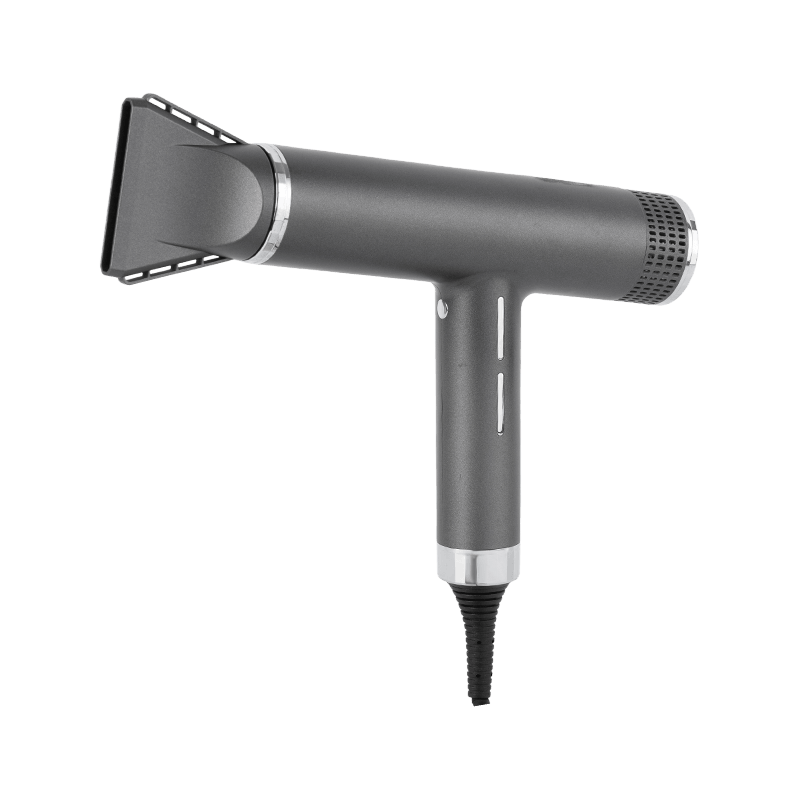
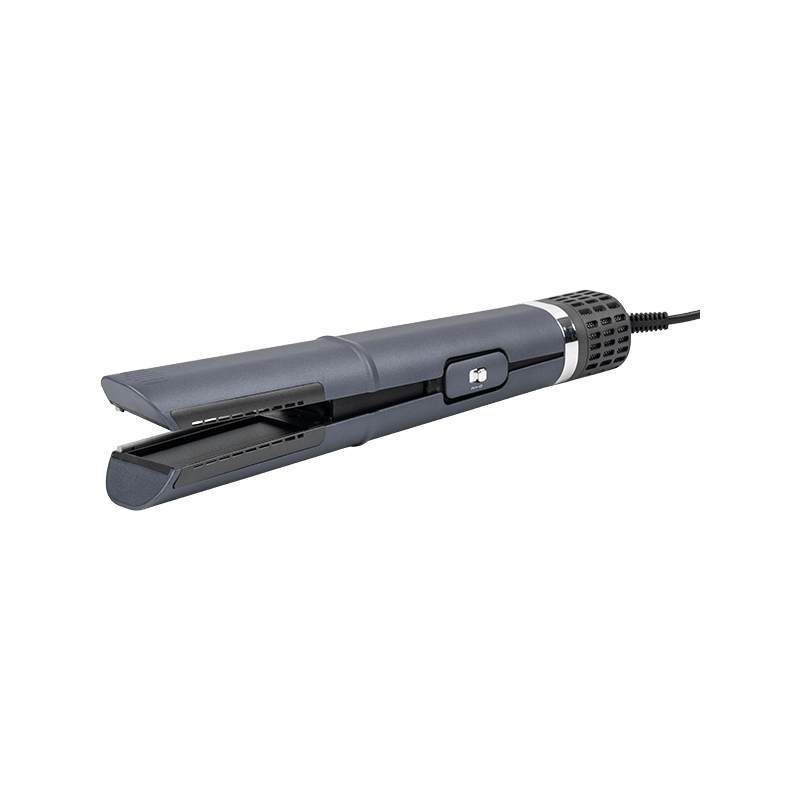
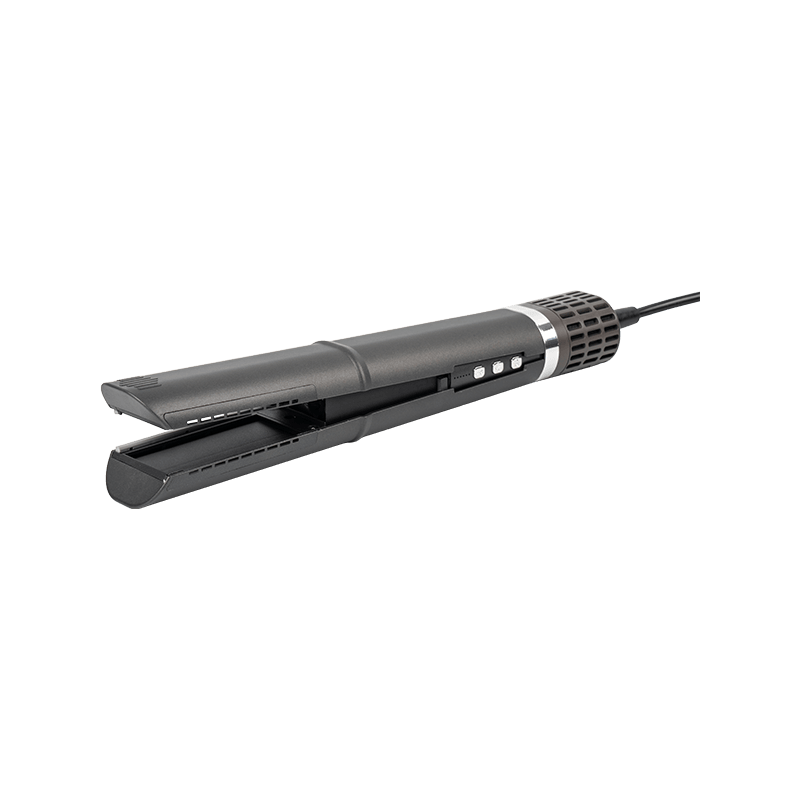
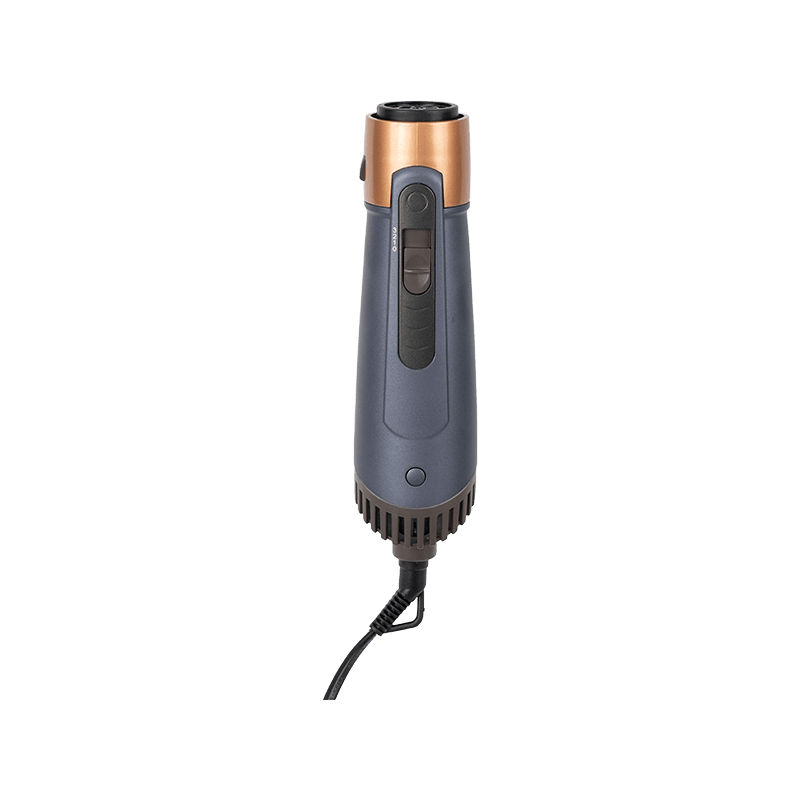
A wet-to-dry flat iron is not an ordinary straightener used on damp hair. It is a styler with a temperature ceiling, moisture-aware control, and a plate or airflow design that takes you from towel-damp hair to a finished straight look in one pass. On medium-length hair that is usually 8 to 12 minutes, against roughly 25 to 30 minutes for a dry-then-straight routine.
That answer only holds when the tool is genuinely built for the job. Ordinary flat irons run plates at 200–230°C, and water inside a damp strand flashes to steam the moment it touches that surface. You get the sizzle, the burnt smell, and the rough, dull finish people describe as heat damage. A real wet-to-dry design lowers the plate temperature, controls how fast moisture leaves the hair, and keeps its electronics away from the steam it creates.
What follows is how to tell the two apart on a spec sheet, how to run a wet-to-dry routine without trading hair health for speed, and what brand owners should verify before placing an order.
What "Wet to Dry" Really Means on a Spec Sheet
Read the specification, not the packaging. Three numbers decide whether the claim is real.
1. Plate temperature in wet mode. A working wet-to-dry styler caps its plates at roughly 140–165°C while hair is still damp, then allows a step up to 180–230°C once the strand is dry. A tool with one 220°C setting used on wet hair is a dry-only iron with a marketing label.
2. Recovery time, not just peak temperature. When a hot plate meets a wet section, surface temperature drops. A thermistor or PTC heater restores the set point within seconds; a cheap bimetallic thermostat overshoots and dips in turn, which is why some irons scorch one section and barely dry the next.
3. How the moisture escapes. Two designs dominate. Airflow types push heated air through hollow plates or a vented barrel so hair dries as it is pressed. Thermal types use slotted plates, low thermal mass and steam channels that let vapour escape sideways instead of being trapped against the cuticle. Vapour that cannot leave is the problem.
One more detail matters in practice: wet to dry does not mean soaking wet. Most manufacturers, including us, recommend starting at 70–80% dryness — hair that feels cool and damp but does not drip. Starting from dripping hair forces the tool to spend its entire heat budget on evaporation.
Our professional 2-in-1 wet-and-dry high-speed straightener was developed around that constraint, with a wet mode that holds a lower set point, a dry mode for finishing, and an airflow path that removes surface moisture before the plates do the straightening work.
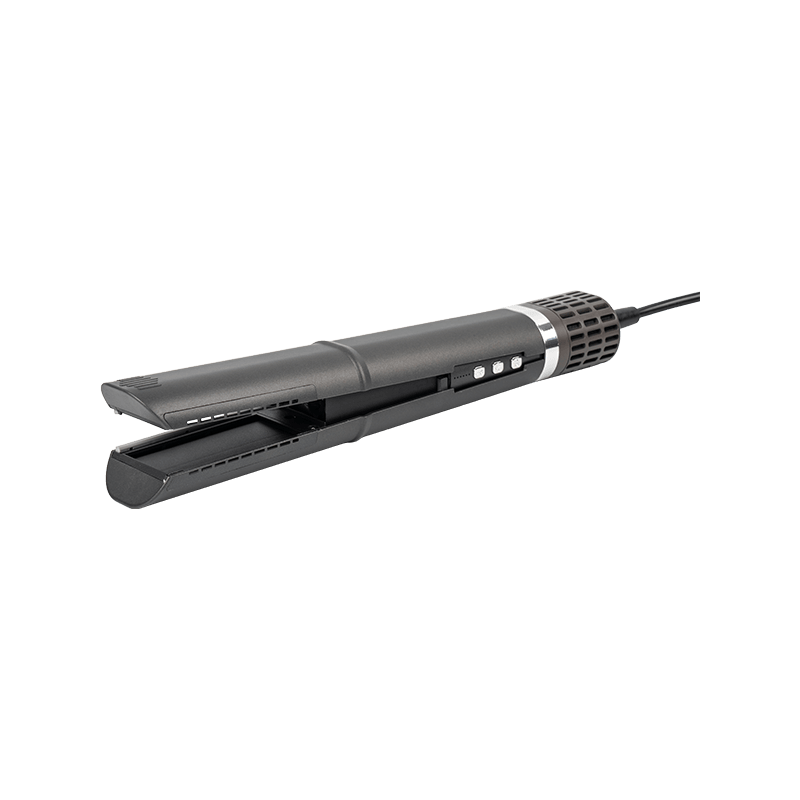 JYS-C6 Professional 2-in-1 Wet & Dry High-Speed Hair StraightenerKey Features Selling Points: Industry-Leading BLDC High-Speed Motor: Equipped with a state-of-the-art brushless motor reaching 110,000 RPM with a lifespan exceeding 10...View Product →
A Safe Wet-to-Dry Routine, Step by Step
Tool choice covers half the risk, and the sequence covers the other half.
- Towel dry first. Squeeze rather than rub, and stop at 70–80% dryness — cool and damp, never dripping.
- Apply a heat protectant formulated for damp hair. Sprays designed for dry hair often carry alcohols that flash off a wet section too quickly.
- Detangle with a wide-tooth comb, then clip hair into four to six sections no wider than about 2.5 cm.
- Set temperature by hair type: 140–150°C for fine or colour-treated hair, 155–165°C for thick or coarse hair. Do not begin above 180°C on damp hair.
- Glide at 2–3 cm per second from root to tip, one pass per section. Pausing on a damp section concentrates heat in one spot.
- Let residual moisture leave the strand before a second pass, then finish with a cool shot to settle the cuticle.
Why Moisture Control Is a Manufacturing Problem
140+ staff, 4 production lines, 300,000+ sets a month, 3 million+ units a year — and a wet-mode tolerance that has to hold on every single one.
A wet-to-dry claim places unusual stress on parts buyers rarely inspect: heater tolerance, thermistor accuracy, plate coating adhesion under thermal cycling, and the sealing that keeps steam out of the PCB. A one-degree drift in a dry iron is irritating. In a wet iron it is the difference between evaporation and boiling.
We have built small appliances since 2009, first as Yuyao Joys and today as Shaoxing Bangshuo, and a large share of our development work sits in hair care tools. That is why our wet-to-dry platforms are validated on three points before tooling is approved: wet-mode set-point accuracy of ±5°C across a 30-minute run, coating abrasion testing after 500 thermal cycles, and humidity testing of the housing assembly. More on how that fits our wider quality and certification process.
Compliance is the second half of the same problem. Mainstream wet-and-dry straighteners have to clear TUV GS, CE, CB, ERP, REACH, PAHS, ROHS and SCCP before they can sit on a European shelf, and audits such as BSCI and BEPI increasingly appear beside those certificates in retail tender documents.
Heat Damage, Hair Type, and Where Wet-to-Dry Stops Working
Wet-to-dry tools are most forgiving on medium, straight-to-wavy hair. They are least forgiving on fine, already-bleached hair, because those strands lose moisture fastest and hold the weakest internal bonds.
Fine or colour-treated hair
Keep wet mode at 140–145°C. Fine hair usually dries in a single pass, so a second pass adds heat without adding smoothness. Bleached hair needs a bond-building treatment before styling, not a higher setting.
Thick, coarse or curly hair
Coarse hair can take 155–165°C, but it holds water longer. Work in thinner sections and give the tool time to move moisture out rather than raising the temperature to compensate.
Already-dry, dehydrated hair
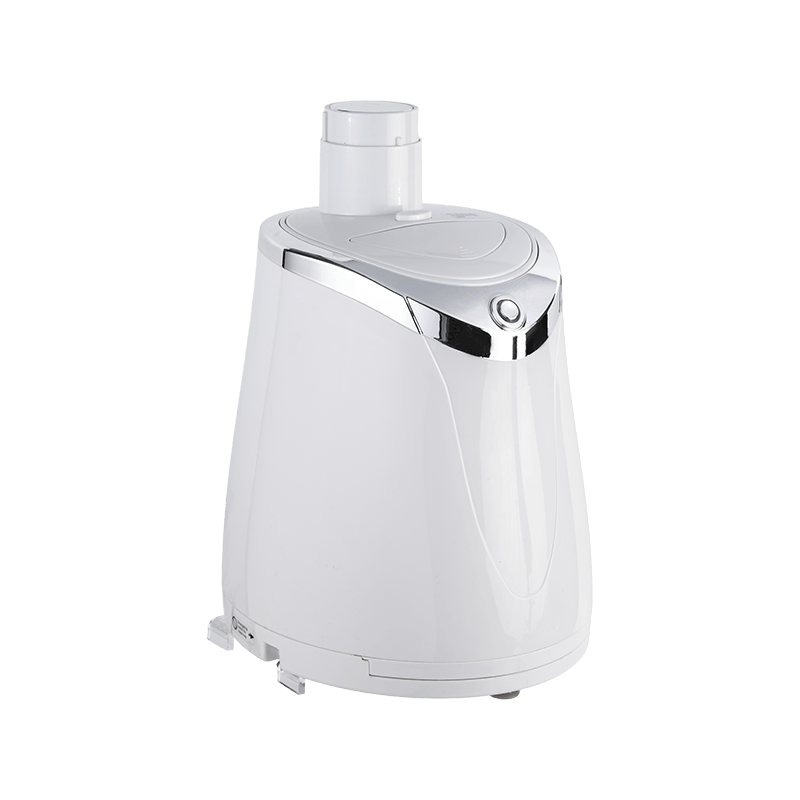
If hair is dry but feels brittle, a wet-to-dry plate is the wrong tool. A moisture-first styler such as our ultrasonic steam-mist hydrating straightener releases a fine mist along the plate, softening the strand before it is pressed flat.
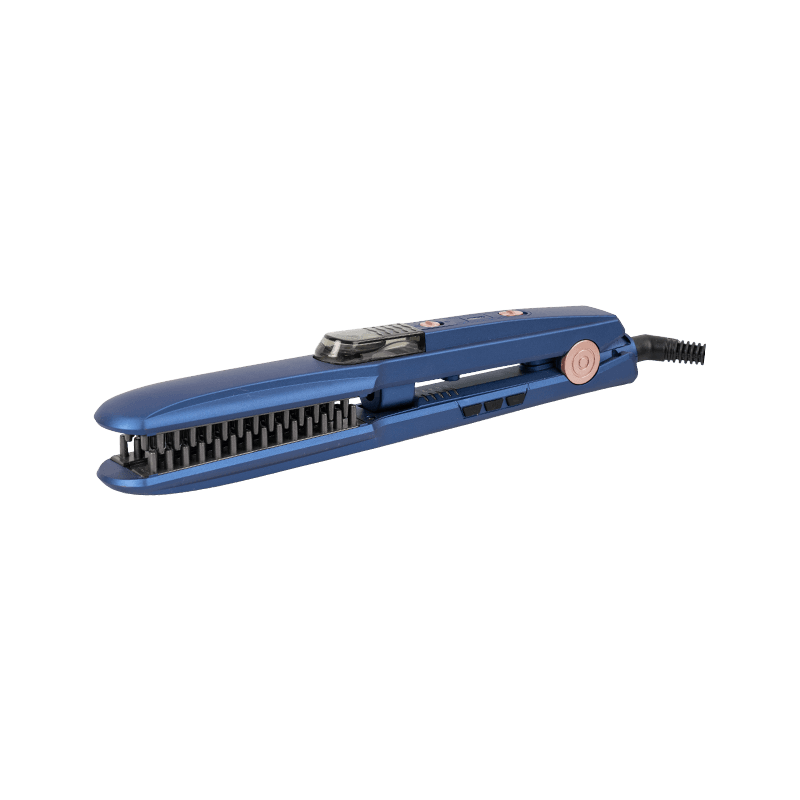 JYS-C3 Ultrasonic Steam Mist Hydrating Hair StraightenerKey Features Selling Points: Revolutionary Ultrasonic Atomization Technology: Features an advanced ultrasonic atomization system that converts water into ultra-fine st...View Product →
Two limits are worth stating plainly. Wet-to-dry styling will not replace a blow-dry when you want root volume, because the plates press hair flat by definition. And no tool compensates for a colour service that has already stripped the cuticle. If you are weighing heat sources for fragile hair, our breakdown of which straightener is healthiest for your hair covers the trade-offs.
Common Mistakes and What to Do Instead
Most wet-to-dry damage users report traces back to habits rather than faulty tools.
| Common mistake |
What actually happens |
Better approach |
| Starting on soaking wet hair |
Water flashes to steam inside the shaft; you hear sizzling and smell burning |
Towel dry to 70–80% first, then start styling |
| Running one section three or four times |
Cumulative heat exposure multiplies, even at a lower wet-mode setting |
One slow pass, then move on and return only when the hair is fully dry |
| Assuming any temperature is safe on wet hair |
200°C feels normal on dry hair but boils moisture inside a damp strand |
Cap wet mode at 140–165°C and raise the setting only once hair is dry |
| Skipping heat protectant on damp hair |
Water carries heat deeper into the cortex, so unprotected bonds break faster |
Spray a damp-hair protectant before sectioning, not after |
| Applying oil or serum to a wet plate |
Residue bakes onto the coating, reduces glide and dulls the finish |
Keep plates clean, apply oils to the ends afterwards |
Wet-to-dry faults and their fixes, based on common user reports and factory return data.
What Buyers Should Verify Before Ordering
If you are sourcing wet-to-dry models for a brand or retail programme, these items decide whether the first container matches the sample.
- Wet-mode temperature ceiling and its tolerance band, supported by a test report rather than a claim.
- Heater and sensor type, with a stated recovery time under load.
- Plate coating material plus adhesion data after thermal cycling and abrasion.
- Airflow path on hybrid designs: motor type, rated life and noise at 30 cm.
- Steam and condensation management: sealing level, drainage and housing ventilation.
- Certification package for the destination market, including TUV GS, CE, CB and ERP.
- MOQ, tooling and sample lead times, and retail packaging requirements.
- A pilot-run protocol — 30 to 50 units tested at high humidity before mass production.
For travel retail and dual-voltage programmes, chassis size matters as much as the plate. Our compact 2-in-1 wet-and-dry straightener keeps the same wet-mode logic in a shorter body built for 110–240 V specifications.
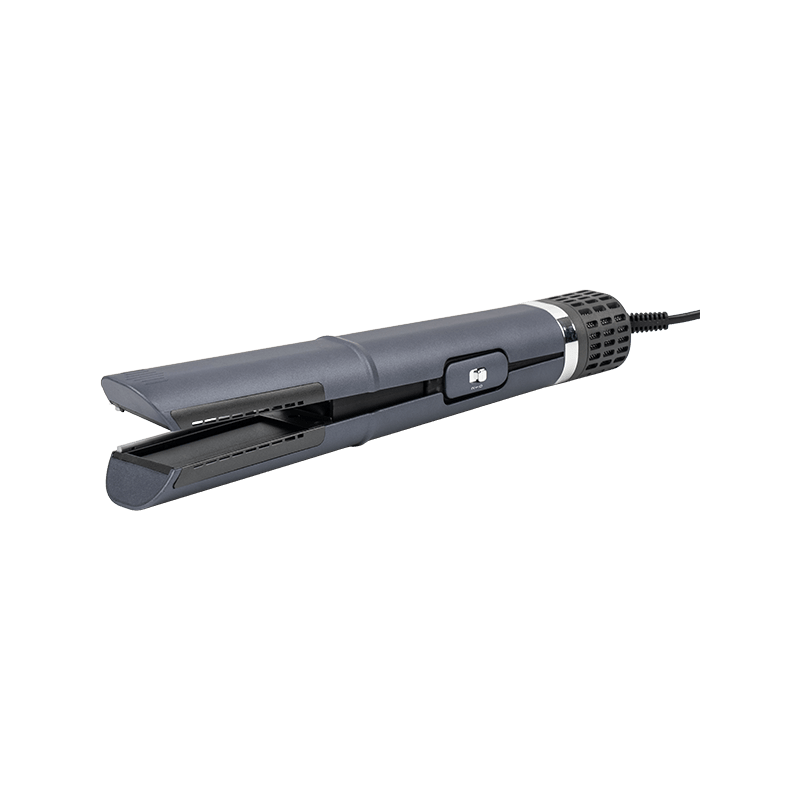 JYS-C6-B Compact 2-in-1 Wet & Dry Hair StraightenerKey Features Selling Points: Revolutionary Wet-to-Dry Straightening: Unlike traditional straighteners that require completely dry hair, the JYS-C6-B can be used on wet...View Product →
Safety Notes Worth Printing on the Box
- Never use the styler with wet hands, beside a filled sink, or anywhere it could fall into water.
- Unplug before cleaning and wipe plates only after they have cooled to room temperature.
- Wet mode is still hot: 140–165°C burns skin on contact, so keep the tool away from children and from the scalp.
- If you hear repeated sizzling or smell burning, stop — that is water flashing inside the hair, not the tool working.
- Check the cord, swivel joint and plug every few months for stiffening or discolouration.
Wet-to-dry flat irons earn their place when the plate temperature is genuinely limited, the moisture has somewhere to go, and the routine respects the 70–80% starting point. Get those three right and you cut styling time roughly in half without paying for it in cuticle damage.
For brand owners evaluating suppliers, the useful questions are the boring ones: what is the wet-mode tolerance, what happens to plate temperature after contact with a wet section, and which certificates are already in hand for the target market. A supplier that answers with test data is usually the one whose third shipment matches the first.


 English
 Español