How to Use a Hair Dryer Diffuser: The Short Answer First
Stop moving the air. Set the dryer to its lowest speed and lowest heat, hold the diffuser bowl still against your head, and leave the curls alone until they are roughly 90% dry. That one habit separates defined curls from a frizzy halo, and everything below is detail built around it.
Most people who fight with a diffuser use it like a concentrator nozzle: sweeping it side to side, chasing loose strands, speeding up when time runs short. That motion pushes wet, fragile strands in different directions and breaks the clumps that hold a curl together.
The order matters as much as the settings: product on soaking-wet hair, hover drying before any contact, cupping and holding, then a cold shot at the end. Skip the cold shot and the shape you just built will drop within the hour.
What a Diffuser Actually Changes About the Airflow
A diffuser is not really a heat-reduction accessory; it is a speed-reduction accessory. The bowl and its fingers spread the same volume of air across a much wider surface, so the velocity that reaches any single strand drops sharply. Lower velocity means less mechanical force lifting the cuticle, which is why diffused hair often looks smoother than blow-dried hair at the same temperature.
The fingers also leave gaps so air reaches the roots without flattening the mid-lengths, which means volume builds at the scalp while the curl clumps stay intact. The same airflow logic shows up in our guide to how a hot air brush works, where a slower, wider air path does the same job.
Features That Make the Routine Easier
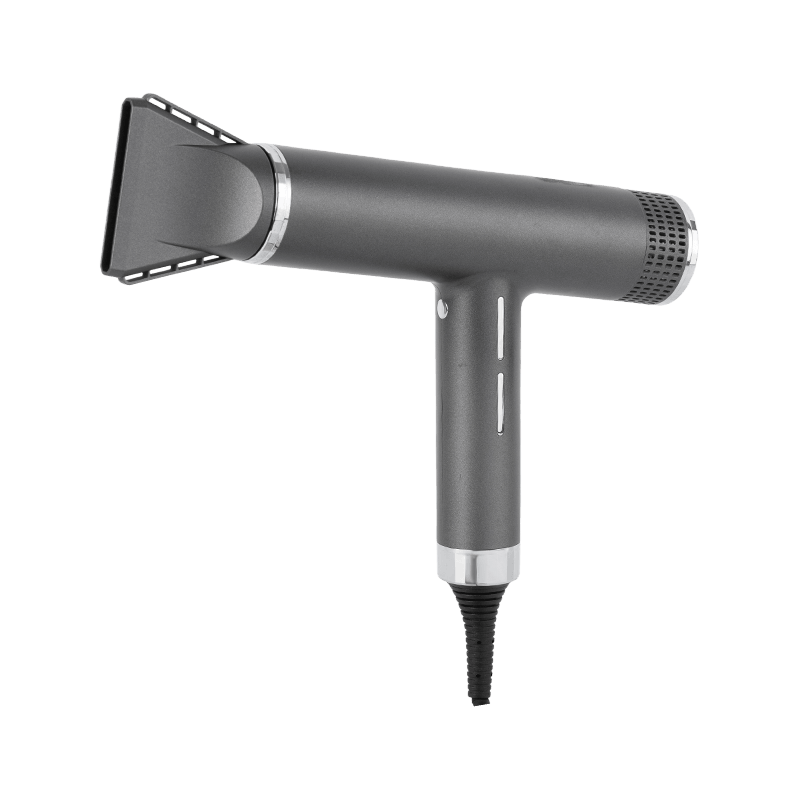
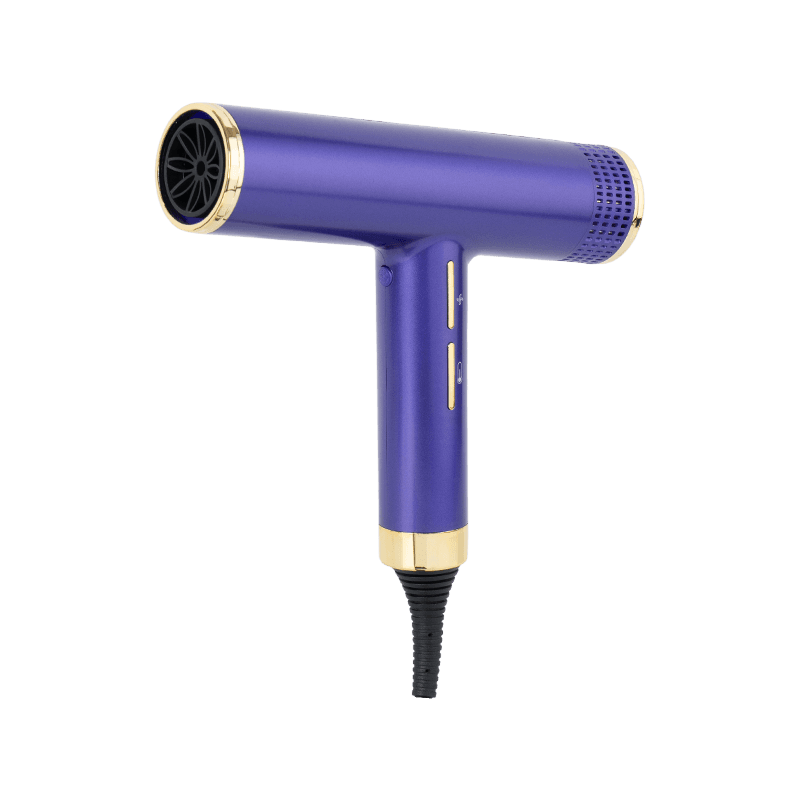
Any dryer with a diffuser attachment can work, but three details save time: a true low-speed setting rather than only a low-heat dial, a bowl that locks on tightly, and a cool-shot button you can reach without looking down. High-velocity dryers with a separate low-speed mode, such as the JYSD20 self-cleaning anti-flyaway high-speed hair dryer, are built for exactly that kind of switching.
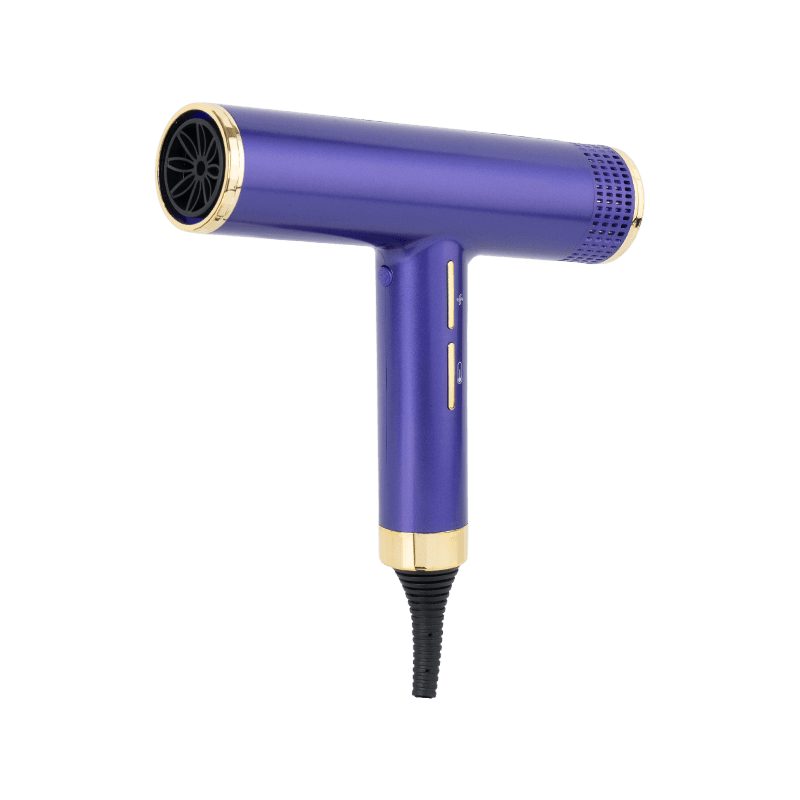 JYS-D20 Self-cleaning Anti-flyaway High-speed Hair DryerKey Features Selling Points: Ultra-High Speed BLDC Motor: Equipped with a state-of-the-art brushless motor reaching approximately 110,000 RPM, delivering ultra-powerfu...View Product →
A Five-Step Diffusing Routine That Works on Real Hair
Follow this sequence on wavy, curly, or coily hair. Budget 15 to 25 minutes depending on density and length.
- Prepare on soaking-wet hair. Apply leave-in and gel while the hair is still dripping, then scrunch once with a microfiber towel. Water carries heat away from the strand, so starting wet is your main protection. Do not comb after this point.
- Hover before you touch. Low speed, medium-low heat. Hold the bowl 10 to 15 cm from the head and let it sit over one area for 30 to 60 seconds. This sets the gel cast before anything presses on the hair.
- Cup and hold. Once the surface stops dripping, gather a section into the bowl, push gently toward the scalp, and hold for 10 to 15 seconds. Switch the air off before you pull the bowl away; pulling while the air runs is the fastest way to break a curl.
- Work the roots last. Turn the bowl so the fingers touch the scalp and move it in small circles for 20 to 30 seconds per spot. Volume is decided here, and so is most frizz if the heat is too high.
- Finish cold. Give the head 60 to 90 seconds of cool air to close the cuticle and fix the shape, then scrunch the cast out with two or three drops of light oil on your palms.
Settings Cheat Sheet by Hair Type
Treat this as a starting point and adjust by feel. The heat column refers to the air temperature at the strand, not the number printed beside the dial.
| Hair type |
Speed |
Heat |
Where to focus |
| Fine wavy (2A-2B) |
Low |
Low |
Hover only; stop at 80% dry and air-dry the rest |
| Medium curls (2C-3B) |
Low |
Medium-low |
Alternate hovering and cupping; roots last |
| Thick or coily (3C-4C) |
Low |
Medium |
Small sections, longer holds, expect 25 minutes or more |
| Damaged or bleached |
Low |
Low |
Keep the bowl moving between sections; skip root scrubbing |
| Straight hair, volume only |
Low |
Medium |
Hover at the roots, then finish with cool air |
Settings are starting points; adjust by how the hair feels, not by the dial labels.
The Numbers That Decide the Result
Below 60 °C at the strand, 10 to 15 seconds per hold, 15 to 25 minutes per full dry.
Those three numbers cover most of what goes wrong. Most dryers run well above 60 °C on their top setting, and although the diffuser spreads the airflow, that safety margin disappears the moment you park the bowl on one spot.
- Distance: 10 to 15 cm while hovering, contact only after surface water is gone.
- Hold time: 10 to 15 seconds with contact, 30 to 60 seconds hovering.
- Total time: 10 to 15 minutes for fine hair, 25 to 35 minutes for thick or coily hair.
- Cold shot: 60 to 90 seconds, always at the end.
Six Mistakes and the Fix for Each
These are the problems that appear most often when someone moves from a concentrator nozzle to a diffuser.
| Mistake |
What to do instead |
| Starting on damp or dry hair |
Rewet the hair; product needs water to spread |
| Using high speed to save time |
Stay on low speed; speed is what creates frizz |
| Sweeping the bowl like a blow dryer |
Hold each position still for 30 to 60 seconds |
| Pulling the bowl away with the air on |
Switch off, then release the curl |
| Skipping the cold shot |
60 to 90 seconds of cool air locks the shape |
| Touching curls while they dry |
Wait until the hair is 90% dry before scrunching |
Most frizz complaints trace back to rows one through three rather than to the dryer itself.
Habits That Keep a Diffuser Performing
A diffuser loses performance quietly. These habits keep airflow steady and the attachment secure.
- Rinse the bowl and fingers every two to three weeks; residue and dust collect in the gaps and cut airflow.
- Clean the rear intake filter monthly. A blocked filter makes the motor run hot and pushes you toward higher settings.
- Check the attachment lock before every use; a bowl that slips mid-section pulls the curl out of shape.
- Store the diffuser off the dryer if it uses a twist lock, because constant pressure cracks the plastic collar.
- Keep one dryer for diffusing if you style daily; repeated removal wears the joint faster than anything else.
- Air-dry between wash days. Diffusing is gentle, but it is still heat.
If you want a single tool that covers diffusing and a straight blowout, a dryer with locking attachments and an independent low-speed dial, such as the JYSD20B 3-in-1 professional DC motor hair dryer, removes the need to swap tools mid-routine.
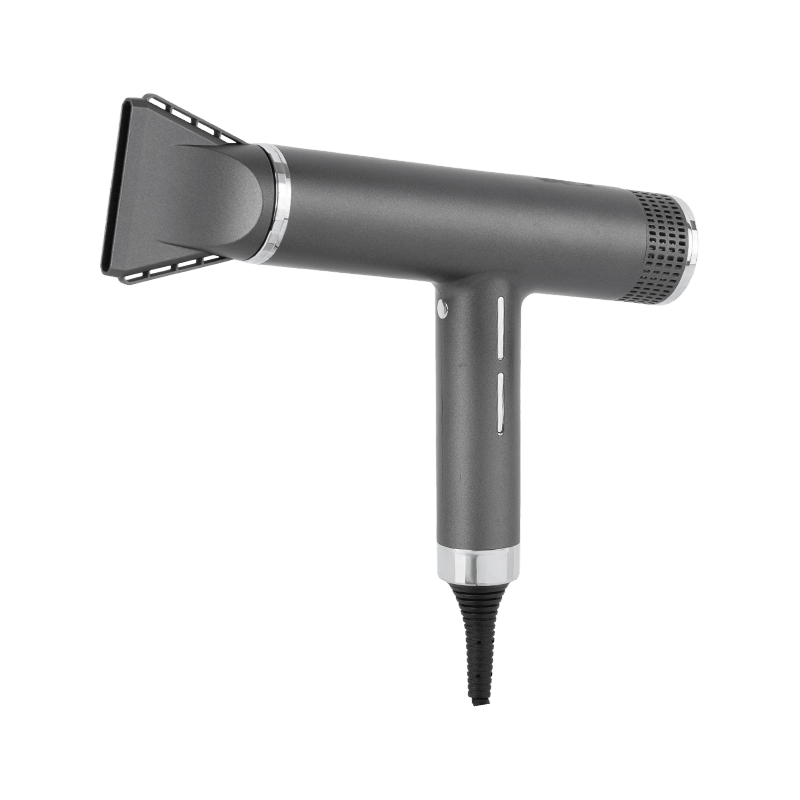 JYS-D20-B 3-in-1 Professional DC Motor Hair DryerKey Features Selling Points: Reliable DC Motor Performance: Equipped with a high-quality DC motor delivering 1200W of powerful airflow (both AC120V and AC220V-240V ver...View Product →
Heat, Safety, and Fine-Hair Cautions
Wet hair stretches and breaks more easily than dry hair, so keep brushing out of the routine entirely. Fingers only while diffusing.
On fine, bleached, or chemically relaxed hair, stay on the lowest heat and test the air on the inside of your wrist. If it feels hot on skin, it is too hot for hair.
Pixie diffusing presses warm air against the scalp for long stretches. Shorten the holds if you feel heat building, and never run a diffuser over completely dry hair to refresh a style. Mist first, or you are adding friction and static instead of shape.
If the bowl becomes hot to the touch, stop and let the dryer cool. That usually means the rear intake filter is blocked and the motor is working harder than it should.
The Routine in One Line
Start wet, hover before you cup, release only after the air is off, and finish cold. The first attempt may take 25 minutes; after two or three wash days, most people finish in under 15. If you are choosing equipment for this routine, our hair dryer range includes models with independent low-speed control and locking diffuser attachments.


 English
 Español