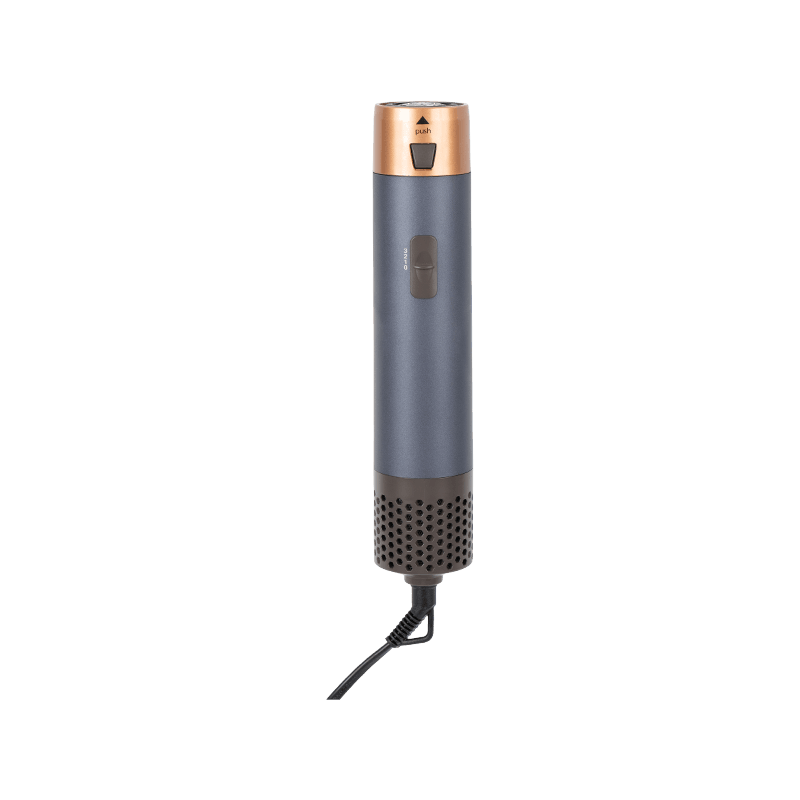
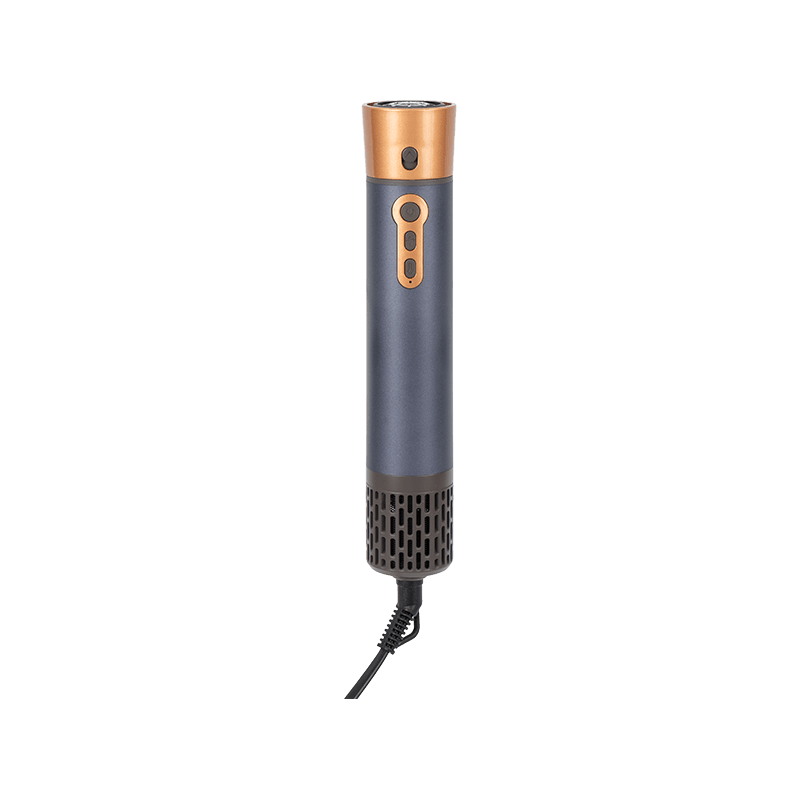
How A Hot Air Brush Works In Simple Terms
A hot air brush works by pairing a rotating or fixed bristle brush with a built in heating element and a small motorized fan. Air is pulled in through a rear vent, passed over a heated coil, and pushed out through the barrel while the bristles section and tension the hair at the same time. This lets a single tool dry, smooth, and shape hair in one pass instead of requiring a separate blow dryer, round brush, and flat iron.
Most modern hot air styling brushes operate between 800 and 1200 watts, with barrel diameters ranging from 25mm to 75mm depending on the hair length and curl pattern the tool is designed for. Because heated air and mechanical tension are applied together, hair dries and takes shape in the same motion, which typically cuts total styling time by a third to a half compared with drying hair flat and then curling or straightening it afterward.
The Core Components Inside A Hot Air Brush
Every hot air brush, regardless of brand or price point, is built around the same four working parts. Understanding what each one does explains why some brushes style hair faster or leave it smoother than others.
Main internal components of a hot air styling brush and their function
| Component |
What It Does |
Typical Range |
| Motor and fan |
Pulls in room air and forces it through the barrel at a controlled speed |
2 to 3 airflow speeds |
| Heating coil or ceramic element |
Heats the moving air before it reaches the hair |
60C to 175C |
| Barrel and bristle mix |
Grips, tensions, and shapes the hair while air flows through vents |
25mm to 75mm barrels |
| Vent holes |
Release heated air evenly across the section of hair being styled |
Usually 20 to 60 vents |
Some higher tier hot air brushes add a tourmaline or ceramic coating on the barrel. This coating spreads heat more evenly across the metal surface, which reduces the hot spots that can scorch a section of hair if it sits against bare metal too long.
Step By Step Breakdown Of The Styling Process
When someone turns the tool on and runs it through damp or dry hair, several things happen almost simultaneously rather than in a strict sequence, but it helps to walk through the mechanics in order.
- Room temperature air enters through the rear intake grill as soon as the motor starts spinning.
- The air passes across the internal heating element and rises to the selected temperature setting within a few seconds.
- A section of hair is wrapped around the barrel, either by hand rotation or by the brush's own rotating mechanism.
- Heated air exits through the barrel vents directly into the wrapped section, evaporating surface moisture and setting the cuticle in the shape of the barrel.
- The brush is slowly pulled down and released, and the hair holds the curve or smoothness created by the heat and tension combined.
The tension from the bristles matters as much as the heat itself. Heat alone softens the hydrogen bonds inside the hair shaft, but it is the physical wrap around the barrel that determines the final shape those bonds reset into once the hair cools.
Why Barrel Size Changes The Result
Barrel diameter is the single biggest factor in what kind of finish a hot air brush produces. A smaller barrel wraps hair into a tighter curve and holds heat against a smaller surface area, which builds more curl. A larger barrel spreads the same heat across more hair at once, producing volume and a looser bend rather than a defined curl.
Barrel size compared with the finished look it typically produces
| Barrel Diameter |
Best For |
Typical Finish |
| 25mm to 32mm |
Short to medium hair |
Defined curls and bounce |
| 38mm to 50mm |
Medium to long hair |
Soft waves with lift at the root |
| 60mm to 75mm |
Long or thick hair |
Smooth blowout with volume |
Hot Air Brush Compared With A Blow Dryer And Separate Round Brush
The main appeal of a hot air brush is combining tools that normally require two hands and two devices. The tradeoff is that a single tool cannot always match the raw airflow power of a dedicated dryer or the precise tension control of a separate round brush.
Side by side comparison of styling method, time, and heat exposure
| Method |
Average Styling Time |
Hands Needed |
Heat Exposure Per Section |
| Hot air brush |
15 to 25 minutes |
One hand |
Single pass, moderate |
| Blow dryer plus round brush |
25 to 40 minutes |
Two hands |
Multiple passes, higher total |
| Flat iron after full dry |
10 to 15 minutes after drying |
One hand |
Direct plate contact, concentrated |
Because a hot air brush spreads heat through moving air rather than direct plate contact like a flat iron, the heat exposure on any single strand tends to be lower even though the tool feels warm to the touch throughout the styling session.
Wattage Airflow And Temperature Settings That Matter Most
Two hot air brushes can look identical and perform very differently once the internal specifications are compared. The wattage of the motor and heating element together determines how fast the tool recovers heat after touching cooler, damp hair.
1000W and above typically finishes a full style in 15 to 20 minutes on thick hair
How wattage tends to affect drying speed on medium length hair
| Wattage Range |
Approximate Full Style Time |
Best Suited Hair Type |
| Under 800W |
30 minutes or more |
Fine, thin hair |
| 800W to 1000W |
20 to 25 minutes |
Medium density hair |
| 1000W and above |
15 to 20 minutes |
Thick or coarse hair |
A brush with multiple heat settings, usually low, medium, and high, allows the same tool to be used safely on fine or color treated hair at a lower setting while still offering enough heat for thick hair on the highest setting. A cool shot button, when included, briefly stops the heating element while keeping airflow running, which helps set the final shape before the hair is released from the barrel.
How To Choose The Right Hot Air Brush For Your Hair
Picking the right tool comes down to matching barrel size, bristle type, and heat range to hair length, density, and current condition rather than choosing based on price alone.
- Fine or damaged hair benefits from a lower maximum temperature, ideally with a setting under 150C, and a nylon bristle mix that reduces snagging.
- Thick or curly hair generally needs higher wattage and a mixed boar and nylon bristle set to grip the hair firmly enough to smooth it in one pass.
- Short hair styles work best with a smaller barrel under 35mm so the brush can still rotate freely without running out of length to wrap.
- Long hair styles usually need a barrel of 45mm or larger so a full section can be wrapped without doubling back on itself.
- A rotating barrel is worth the extra cost for people who want a hands free curl, while a fixed barrel is lighter and easier to control for precise root lift.
Best Practices For Using A Hot Air Brush Safely
Hair should be towel dried to around eighty percent before using a hot air brush. Running the tool through soaking wet hair forces it to work harder and holds the heating element at high output for longer, which increases the chance of heat damage at the section closest to the scalp.
Sectioning hair into pieces no wider than the barrel itself keeps heat and tension even across each strand. Moving the brush slowly and steadily, rather than pausing in one spot, prevents the buildup of heat that causes dryness and split ends over repeated use.
Common Mistakes That Reduce Styling Results
Most disappointing results with a hot air brush trace back to a small handful of repeated habits rather than a fault in the tool itself.
Common mistakes and the simple fix for each one
| Mistake |
Effect On Hair |
Fix |
| Styling completely wet hair |
Uneven drying and frizz |
Towel dry to about eighty percent first |
| Sections too wide for the barrel |
Loose, short lived curl |
Match section width to barrel size |
| Skipping the cool shot |
Curl drops within an hour |
Hold cool shot for three to five seconds before release |
| Using max heat on fine hair |
Dryness and breakage over time |
Use the lowest setting that still styles the hair fully |
Frequently Asked Questions About Hot Air Brushes
Does a hot air brush damage hair more than a regular blow dryer
Not inherently. Because the heat is spread through moving air rather than direct plate pressure, a hot air brush used on the correct temperature setting for the hair type typically exposes hair to less concentrated heat than a flat iron and a comparable amount to a blow dryer used with a round brush.
Can a hot air brush replace both a blow dryer and a curling iron
For most hair lengths and textures, yes, since the barrel is drying and shaping the hair in the same pass. Very thick or long hair may still need a few extra minutes with a standalone dryer first to remove bulk moisture before the hot air brush finishes the style.
How long does it take to style hair with a hot air brush
Most users complete a full style in 15 to 25 minutes on towel dried hair, depending on hair length, density, and the wattage of the brush being used.
What barrel size should a beginner start with
A mid range barrel between 38mm and 50mm is the most forgiving starting point, since it produces a soft wave or loose curl on most hair lengths without requiring precise sectioning technique.
Is it safe to use a hot air brush every day
Daily use at a moderate heat setting is generally tolerated by most hair types, though hair that is already color treated, chemically straightened, or damaged benefits from limiting heat styling to three or four times a week and using the lowest effective temperature setting.


 English
 Español