The Short Answer: Clamp or Wrap
A curling tong has a spring-loaded clamp that presses the hair against a heated barrel. A curling wand has no clamp at all, so you wrap each strand around the barrel by hand and let it fall. If you want repeatable, defined curls with far less chance of burning your fingers, buy a tong. If you want loose, undone, beach-style waves and you are willing to practise, buy a wand.
That is the whole decision in two sentences. Everything after it is about barrel diameter, temperature and how much heat your hair tolerates, not about which tool is objectively better.
The clamp drives the difference in behaviour. It holds the strand in place, so curls come out consistent from section to section and the ends stay neat. The trade-offs are a faint crease where the clamp pressed, and the temptation to hold the tool still, which concentrates heat in one spot. A wand removes the crease and produces a softer, more varied wave, but you must keep even tension and your fingers clear of the hot barrel.
Tong vs Wand: Side-by-Side Differences
Match the tool to the result you actually want, then read the practical note underneath the table.
| What you are comparing |
Curling tong |
Curling wand |
| Build |
Spring clamp presses hair onto the barrel |
Smooth barrel, often tapered, no clamp |
| Curl result |
Uniform, defined ribbon curls, possible clamp line |
Softer waves, curl size varies along the strand |
| Learning curve |
Easier, because the clamp holds the hair |
Steeper, even tension by hand takes practice |
| Burn risk |
Lower for fingers, higher if you grip near the tip |
Higher, a heat-resistant glove is strongly advised |
| Best for |
Neat ends, uniform sets, thick hair |
Beach waves, layered cuts, casual styling |
| Common barrel sizes |
19 mm to 32 mm, straight |
13 mm to 25 mm tapered, 25 mm to 32 mm straight |
Barrel sizes vary by model; the ranges above reflect common consumer and salon tools.
How to Use Each Tool Without Burning Your Hair
The sequence below works for both tools. Only one step changes: how the hair goes onto the barrel.
- Start dry and protected. Curl on completely dry hair unless the tool is rated wet-to-dry; damp hair against a 180 °C barrel is a scalding risk, not a shortcut. Apply heat protectant and comb it through.
- Section and clip. Take sections no wider than the barrel, so a 25 mm barrel takes roughly a 25 mm strand. Clip the rest out of the way.
- Tong: clamp two-thirds down, then wrap the tail. Clamp the strand about two-thirds from the root, wrap the loose tail once around the barrel away from your face, and hold five to eight seconds.
- Wand: wrap base to tip. Hold the tip with a heat glove, spiral it around the barrel with even tension, hold five to ten seconds, then release downwards.
- Let the curl cool in shape. Pin it or cup it in your palm for ten to twenty seconds. Hair sets as it cools, so this step decides how long the curl lasts.
- Finish with fingers, not a brush. Separate the curls with your fingers and add a drop of serum. Brushing before the hair is cool stretches the curl into frizz.
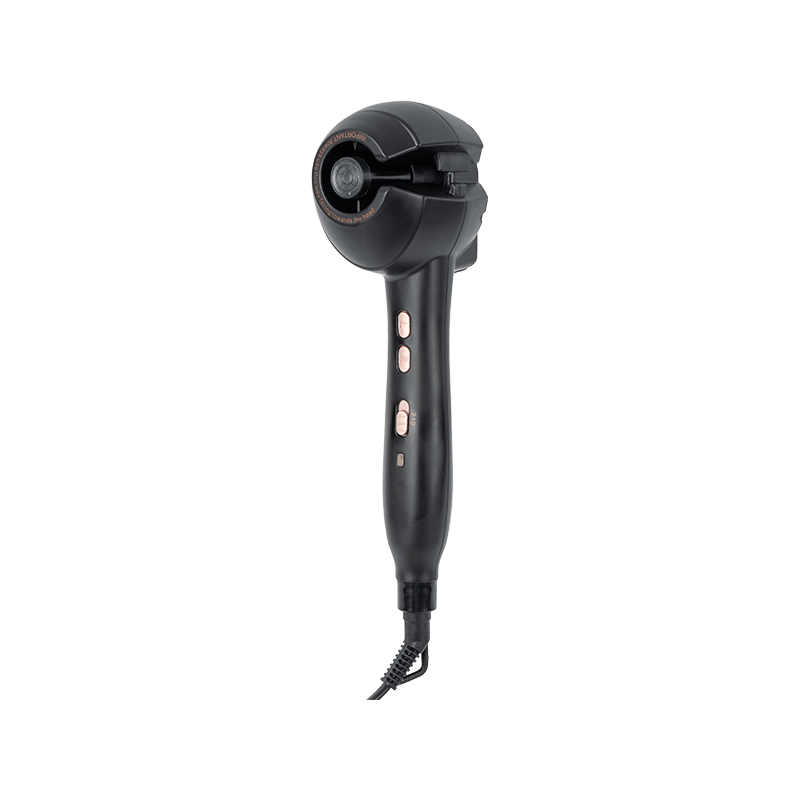 JYS-C2 360° Auto-Rotating Tangle-Free Hair CurlerAutomatic barrel rotation wraps strands without hand-wrapping, with two heat settings and tangle-free styling for home, salon, or travel.View Product →
If the hand-wrapping motion is what puts you off a wand, an automatic curler such as the JYSC2 performs the wrap for you: the barrel rotates, draws the strand in and releases it, so the finished curl sits between a tong and a wand in shape.
For a slower walkthrough of wrapping angles and section sizes, see our guide on how to use hair curlers.
Numbers That Matter More Than the Label
Fine or colour-treated hair: 120 to 150 °C. Medium hair: 150 to 180 °C. Thick, coarse hair: 180 to 200 °C.
Most at-home heat damage happens because the dial stays at maximum for every hair type. Those figures are working ranges, not targets to beat.
- Temperature tolerance: plus or minus 5 °C between units is normal, so two tools set to 180 °C can behave differently.
- Heat-up time: PTC heaters reach working temperature in roughly 30 to 60 seconds.
- Barrel diameter: choose about 5 mm smaller than the curl you want, because curls relax by roughly one size as they cool.
- Auto shut-off: 30 to 60 minutes is typical, so treat it as a backup rather than a routine.
- Cord and voltage: a 360° swivel cord of 2.5 m to 3 m, and 100 to 240 V dual voltage if the tool travels.
Three Habits That Fix Most Curl Problems
Alternate the wrapping direction
Curls that all turn the same way fall into each other and the set looks flat within an hour. Wrap front sections away from the face and alternate the direction on the sides.
Take thinner sections than you think
When a section is thicker than the barrel, the inner strands never reach temperature while the outer ones overheat. The curl drops quickly and the ends feel dry.
Let the curl cool before you judge it
A curl straight off the barrel always looks tighter than it will ten minutes later. Wait until it is cool to the touch before deciding you need more heat or a smaller barrel.
Common Mistakes and the Fix
| Mistake |
What happens |
What to do instead |
| Maximum heat on fine hair |
Cuticle damage and brittle ends within weeks |
Start at 120 to 150 °C and go up only if the curl drops within an hour |
| Sections wider than the barrel |
Inner strands stay cool and drop, outer strands scorch |
Keep each section the same width as the barrel |
| Holding the tool still for fifteen seconds |
A dent or scorch mark at a single point |
Move in a slow spiral, five to ten seconds per section |
| Brushing curls while they are hot |
The curl stretches out and turns into frizz |
Pin or cup until cool, then separate with fingers |
| Clamping too close to the ends on a tong |
A creased, bent tip that no serum will fix |
Clamp two-thirds up and wrap the tail around the barrel |
Most of these problems come from heat, section size and timing rather than from the tool itself.
Checklist Before You Buy, or Before You Spec a Batch
Whether you are choosing one tool for yourself or signing off a container, the same short list decides whether the product performs in the market.
- Barrel diameter, measured at both ends if the barrel claims to be tapered.
- A heat range that starts low enough for fine hair, with a control that holds a setting instead of drifting.
- A stated temperature tolerance, ideally plus or minus 5 °C, so batch-to-batch behaviour stays predictable.
- A cool tip that genuinely stays cool, and a heat glove in the box for wands.
- Auto shut-off, a 360° swivel cord, and the plug, voltage and certification your market requires.
- Packaging, spare parts and a manual in the destination language.
For buyers who need a rechargeable option for travel or for salon use away from a socket, the JYSC5 uses a USB-charged body with an LCD temperature readout instead of a fixed dial.
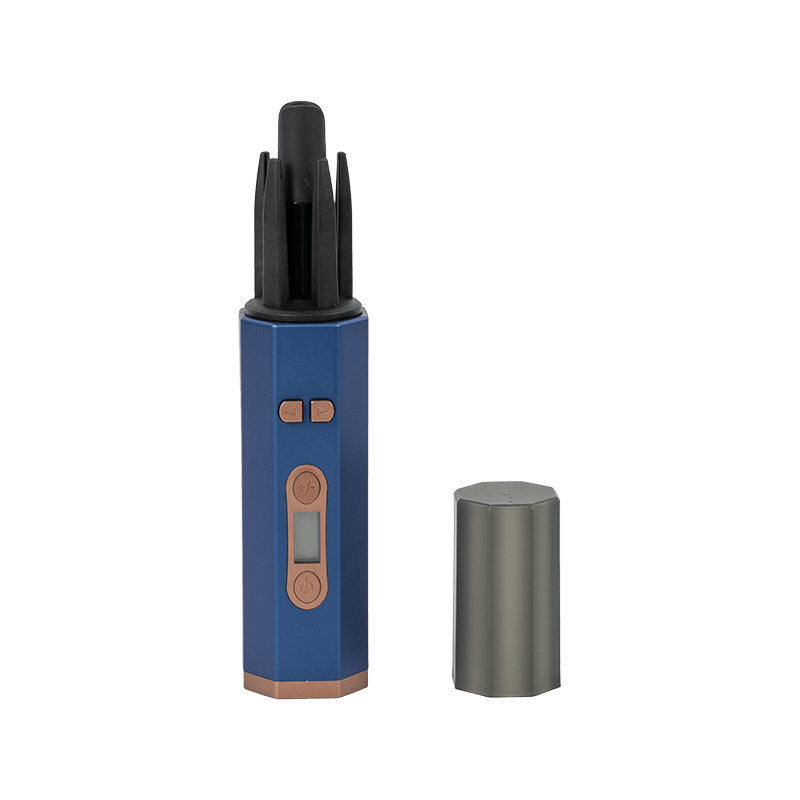 JYS-C5 Wireless USB-Rechargeable Smart LCD Hair CurlerCordless USB-rechargeable curler with 5000mAh battery, LCD temperature readout, dual-direction rotation, and power bank function for travel or salon use.View Product →
Safety Notes That Manuals Bury on the Last Page
Barrel surfaces reach 200 °C, and contact for a fraction of a second is enough to burn skin. A heat glove is not optional for a wand, and it is still worth using with a tong when you wrap the tail by hand.
Never use either tool near water, and unplug before cleaning. Do not wrap the cord around a hot barrel or store the tool while it is warm.
Treat auto shut-off as a backup, not a habit. Unplug after every use, especially in a house with children, and check the cord and plug for damage before each session.
Do not curl wet hair unless the tool is rated wet-to-dry, because water and a 180 °C barrel are a scalding combination. If the coating on the barrel is scratched through to the metal, stop using it and replace the tool.
Making the Choice in the Shop
Buy a tong if you want control, neat ends and a consistent set, and if you would rather not learn a hand-wrapping technique. Buy a wand if you want relaxed waves, a more modern finish and you accept a little practice and a glove. If you need both looks, a 25 mm tong and a 19 mm to 25 mm tapered wand cover most styles without filling a drawer.
The decision is mostly barrel geometry, heater quality and the clamp mechanism, and all three are settled long before the packaging is printed. As a hair care appliance manufacturer with two plants near Yuyao and Shaoxing, Bangshuo builds curling tongs, wands, straighteners and hot air brushes for brands and retailers through ODM and OEM programmes, with TUV GS, CE, CB, ERP, REACH, PAHS, ROHS and SCCP certification on the main lines, BSCI and BEPI audited factories, four production lines and monthly capacity above 300,000 sets.
If you are specifying a curling range, start with the barrel diameters your market actually buys, then fix the temperature range and tolerance before discussing colour and packaging. That order keeps the tool usable and the container problem-free. The full professional hair care appliance range is a good place to compare formats.


 English
 Español